What is grubbing, and how is it different from clearing?
Grubbing is the below-ground half of land clearing. Clearing takes down what stands above the soil: trees, brush, vines and debris. Grubbing pulls what stays behind in the ground, meaning stumps, roots, root mats and buried organic matter. You need both wherever a slab, a driveway, a building pad or fill is going in.
What is the difference between clearing and grubbing?
Clearing works above the ground and grubbing works below it. Clearing cuts the trees, brush and vines and removes logs and other surface debris. Grubbing digs out the stumps and roots that clearing leaves behind. A cleared lot looks open but still holds a root system, while a grubbed lot is down to soil.
The City of La Porte’s spec covers both jobs in one line. It calls for the removal and disposal of trees, stumps, brush, roots, vegetation and logs. A University of Georgia guide on stump removal uses the word the same way. The stump is pulled from the soil, and the roots are grubbed out.
At MTM Land Clearing Services, clearing and grubbing is standard scope: trees and brush down, stumps and root mats pulled. If a quote lists clearing only, expect the stumps to stay in the ground. Ask where the grubbing stops and how deep it goes.
Why do stumps and roots have to come out before you build?
Wood left in the ground rots, and the soil above it can sink as it goes. That matters little under pasture and a lot under concrete. The state’s road spec keeps stumps and roots out of fill. A building pad gets the same treatment before any fill or forms go down.
A University of Georgia tree biology guide explains the sinking. Soil organisms break the wood apart, and as a stump dissolves, the space it occupied is left behind. Even the small roots, which are usually not removed, decay over time and can cause soil to subside.
The rot is slow, so the settling can go on for years. Iowa State University Extension says natural stump decay can take 10 or more years. On open ground, the fix is adding soil as the low spots sink. Near structures or pavement, the Georgia guide says decay may need soil stabilization or injections to prevent damage.
Texas highway work draws the same line. TxDOT’s embankment spec bars trees, stumps, roots and vegetation from the embankment, the built-up fill under a road. A house pad built up with fill works the same way, so the stumps and roots come out first.
Pulled stumps leave holes. TxDOT’s right-of-way spec says to backfill, compact and restore the areas where obstructions were removed. The Georgia guide says putting chips back in a stump hole is usually not recommended. From there, the pad moves on to grading and dirt work.
How deep does grubbing go?
As deep as the spec or contract says, and public specs differ. On state road jobs, TxDOT clears obstructions to 2 feet below natural ground under new fill. La Porte’s city spec takes stumps and roots out to 2 feet below the subgrade under pavement. On a private lot, your contract and your builder’s plans set the depth.
- TxDOT Item 100, where fill (embankment) will go: obstructions out to 2 feet below natural ground.
- TxDOT Item 100, where the ground will be cut: obstructions out to 2 feet below the excavation level.
- TxDOT Item 100, all other areas: obstructions out to 1 foot below natural ground. The same item has trees and stumps removed to 6 inches below ground level.
- La Porte Item 02102: stumps and roots out to 2 feet below the subgrade under pavement. Outside the pavement, 2 feet below the finished surface.
Those numbers are written for roads and city streets. Grubbing also does not chase every last root. The Georgia guide notes that small roots can be found many yards from the trunk, and they usually stay. Get the grubbing depth for your lot in writing before the work starts.
Is grubbing the same as stump grinding or forestry mulching?
No, grubbing pulls the stump and its roots out of the ground. Stump grinding chews the stump down below the surface and leaves the roots in place. Forestry mulching grinds brush and small trees where they stand and leaves low stumps and roots under a mulch layer. Each one leaves different ground behind.
| Method | What it removes | What is left | When it fits |
|---|---|---|---|
| Clearing | Trees, brush, vines and surface debris | Stumps and roots in the soil | The first pass on a wooded lot |
| Grubbing | Stumps, roots, root mats and buried organic matter | Bare soil and holes to backfill | Slabs, driveways, building pads and fill |
| Stump grinding | The stump, cut down below the surface | Roots in the soil and a pile of shavings | Lawns and single stumps near a house |
| Forestry mulching | Brush and small trees, ground in place | Low stumps, roots and a mulch layer | Pasture, trails, fence lines and wooded homesites |
Fixr’s cost guide describes stump grinding as removing the visible part of a stump while leaving the roots intact. Iowa State University Extension adds that a large pile of wood shavings remains in the hole. That is enough for a lawn. For a single stump by the house, stump grinding is usually a better fit than grubbing.
When can you skip grubbing?
Skip it where the ground will not carry concrete or fill. Pasture, trails, fence lines and wooded homesites where the stumps can stay rarely need it. There, forestry mulching clears the brush in one pass and leaves the roots to hold the soil. Grub only the footprint under the house and drive.
A wooded homesite often gets both. The footprint for the house and driveway gets grubbed. The rest of the lot gets mulched, and the trees you want to keep stay standing.
Grubbing the whole tract would turn over soil the roots were holding and add haul-off. Our comparison of forestry mulching vs. traditional land clearing covers that split in more detail.
Where does the debris go after grubbing?
The debris gets mulched on site or hauled off by truck and roll-off container, and the choice is yours. Even the state’s road spec allows for mulch: TxDOT has contractors spread mulched material at approved locations. Burning is rarely the answer here. Harris and Montgomery are nonattainment counties, and the state burning rules are stricter there.
TCEQ’s outdoor burning guide says burning in general is prohibited in Texas. In a nonattainment county, plant debris from land clearing may burn only if no practical alternative exists. Mechanical chipping or mulching is on TCEQ’s list of those alternatives.
A legal burn stays where the land was cleared. TCEQ does not allow moving the debris somewhere else to burn it.
Do you need a permit or an 811 call before grubbing?
You need the 811 call, and you may need a permit. Texas law requires 811 notice at least 48 hours before an excavation begins, and pulling stumps is digging. Permits depend on where the land sits. Montgomery County’s definition of development names clearing, but Harris County’s list leaves it out.
Montgomery County lists clearing next to grading, dredging and filling, so a clearing job there starts with a permit question. Harris County defines development as a man-made change to real estate. Its list names filling, grading, paving and excavation. If your grubbing comes with fill or grading for a pad, that list matters.
Size is the other trigger. Grubbing turns soil over, and TCEQ’s construction stormwater general permit covers construction that disturbs one acre or more of soil. The team checks what the parcel needs during the free estimate.
What drives the cost of grubbing?
The grubbing part of a price comes down to what is in the ground. Stump count and size come first, then root depth. Soil moisture matters, since wet ground slows the work. Haul-off volume is the last piece, and pulled stumps make a lot of it.
The wood below ground adds up. The Georgia guide says a tree’s large woody parts in the soil can top a third of its mass. Mulching the brush on site keeps the haul-off line smaller.
For published market ranges, see our guide to land clearing cost per acre in Texas. Single stumps and whole lots of them are covered in our stump grinding cost guide.
How does MTM handle grubbing?
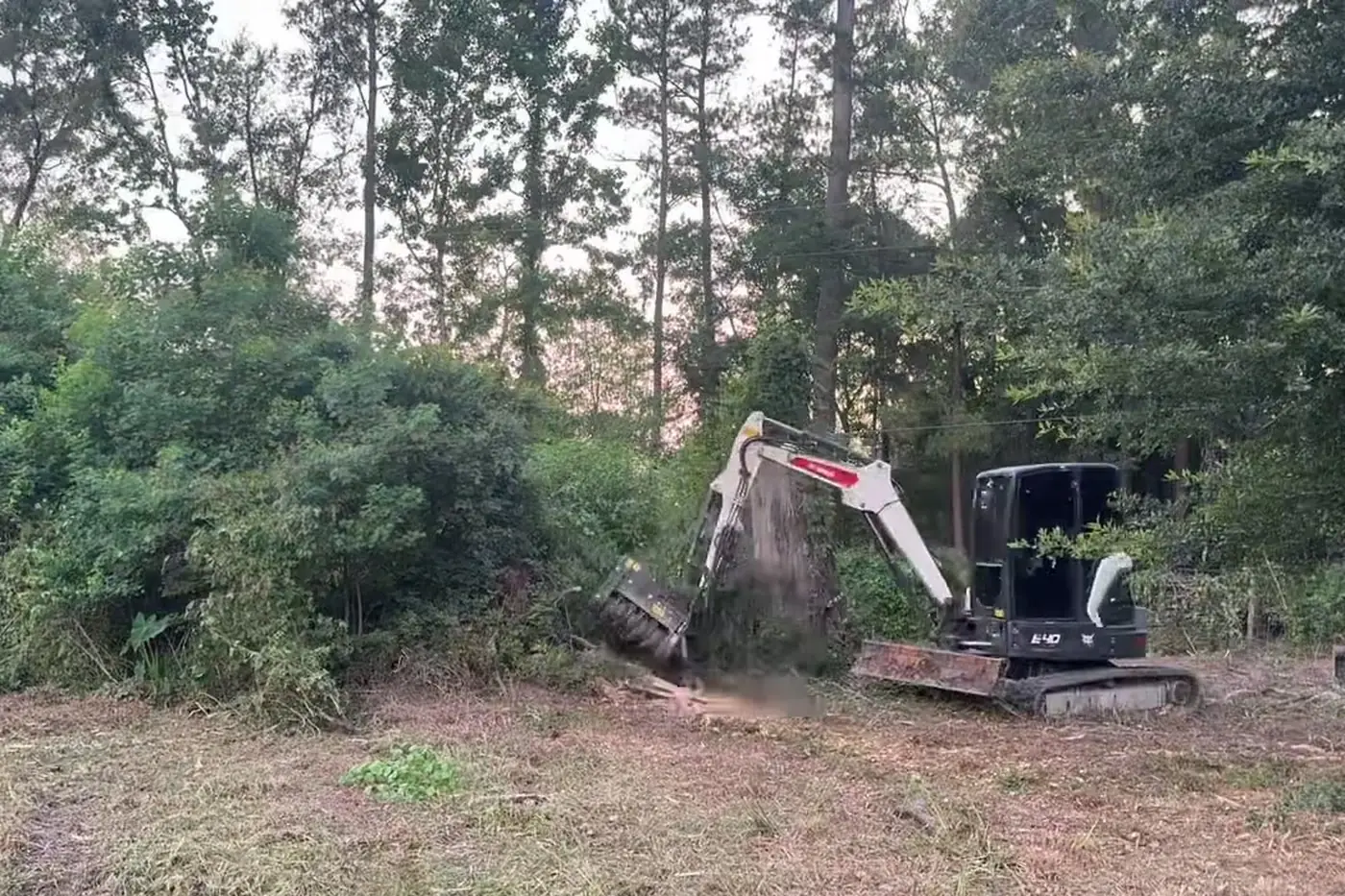
Grubbing is part of our standard clearing scope. A mini excavator pulls the stumps and root balls. A compact track loader with a forestry mulching head clears the brush. Trucks and roll-off containers haul off whatever you do not want mulched on site.
When a build is coming, this work runs as part of our site preparation service. Grading the pad comes after that.
MTM clears and grubs lots and acreage around Spring, Montgomery County and north Houston, and we are fully insured. Call (281) 432-7360 or request a free estimate.